
A policy blueprint for universal Child and Family Health services
23/10/2025
To see every child thrive, we must start with equitable health services in the first 2,000 days of a child’s life. The Centre for Community Child Health (CCCH) has published a new paper proposing how universal and equitable child and family health services can be delivered in Australia.
The first 2,000 days of a child’s life – from conception to age five – are an important window for lifelong health and development. In Australia, Child and Family Health services offer provide free, high-quality and non-stigmatising healthcare from birth to school entry. These services include health and developmental checks, immunisations, health education, parenting support, and help with challenges like mental illness and family violence.
Child and Family Health services aim to be accessible to all families, but in practice, families who would benefit the most from support have the least access. This mismatch is known as the ‘inverse care law.’
This perspective describes how Child and Family Health services are the backbone of a universal early childhood development system. All families should receive support, with more tailored supports for families who are experiencing more challenges. This is called proportionate universalism, and can be delivered using a model with three tiers:
- universal care for all (100% of) children and families
- tailored support for 10-25% of children and families
- sustained home visits for 5-10% of children and families who face multiple challenges.
Better data collection, flexible service delivery, and stronger workforce planning are needed to make this model work. By improving how Child and Family Health services are delivered, we can ensure all children have the best start in life.
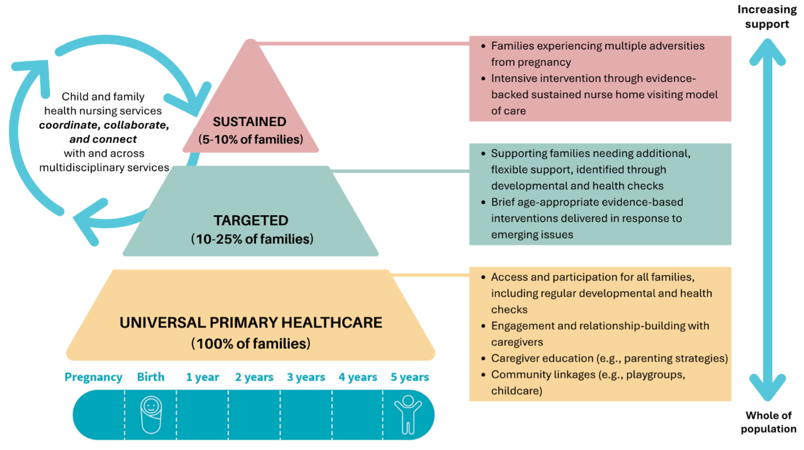
Figure 1. Pragmatic conceptual model for equitable child and family health services.
