
Clearer signals for child equity
05/06/2026
Two new papers from Restacking the Odds and Changing Children’s Chances show that while Australia is already collecting powerful data that tells us how children are tracking, we can use it more effectively to understand who's missing out.
Imagine running a business without knowing daily sales and only receiving a profit report years later. This is how our early childhood system operates. Measurements like the AEDC and NAPLAN show where children are struggling, but by the time we see the data, the moment for early action has already passed.
Australia is undergoing its biggest early childhood reform in a generation. Initiatives like Thriving Kids are designed to improve outcomes for children, but success depends on timely and data-informed decision making.
The papers, ‘Data for equity’, and ‘Clearer signals, earlier action’ introduce a practical decision making tool that clarifies what data is needed for what purpose. This can support those working in early years systems to act earlier and enable children and families to thrive.
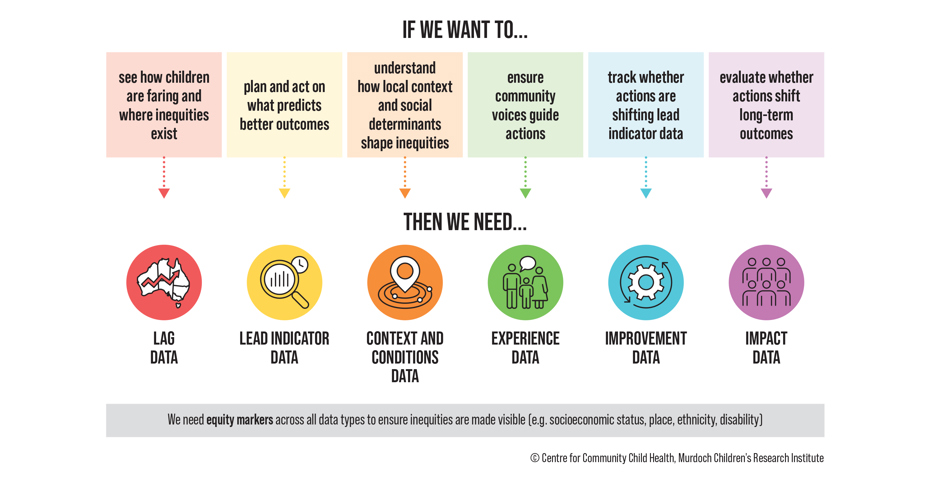
Using data to accelerate equitable systems for children
Read more in an article published in the Medical Journal of Australia's Insight+ publication.
Authors: Sharon Goldfeld, Elodie O'Connor, Jacqui McCann, Sarah Gray, Lynne Millar, and Olivia Hilton.
Read the article in MJA Insight+
Building a Learning and Evaluation System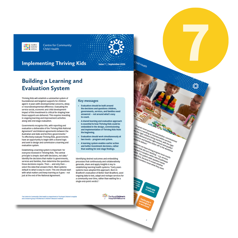
Authors: Olivia Hilton, Jacqui McCann, Suzanne Long, Trina Hinkley, Christine Imms, Elodie O’Connor, and Sharon Goldfeld.
The seventh issue of the Implementing Thriving Kids publication series draws on this data logic to describe how a learning system enables earlier action and better investment decisions, rather than waiting for end-stage findings.
Read the publication
From data overload to decision ready
Speakers: Olivia Hilton, Prof Sharon Goldfeld AM, Fiona Merlin, and Barry Sandison.
This webinar from explores how Restacking the Odds is applying the data logic in their work with local early years partnerships.
Articles
Read ‘Data for equity: Can linked administrative data inform pathways to more equitable child health?’
Read ‘Clearer signals, earlier action: Using data to make better decisions for children
