
Overview
The CCCH Child Deafness and Hearing Research Program encompasses a unique health services framework conducting research across both a population and clinical cohorts. We are a multidisciplinary team of researchers, clinicians and community partners working together to address the most pressing challenges in childhood deafness and hearing health through innovative research, early detection, and systems-level change.
Our team is working hard to create a future where every child who is deaf or hard of hearing can thrive and live healthy, fulfilled lives. At the heart of our work, we prioritise building and strengthening our partnerships across Australia. We work closely with members of the deaf community, and with families and children who are deaf or hard of hearing, to ensure their voices shape our research priorities.
Our vision is to give all deaf and hard of hearing children the best opportunities to reach their full potentials. We aim to achieve this through our mission to improve systems around their care and supports.
The Child Deafness and Hearing Research program aims to provide:
- Better care: by determining the effectiveness of screening and interventions, identifying areas of service/system needs, and ensuring the right children access the right services at the right time;
- Better diagnosis: by determining genotypic and phenotypic predictors of outcomes, facilitating precision medicine to inform management pathways and improve prognostic counselling;
- Better prognosis: by determining the outcomes of interventions for congenital cytomegalovirus infection (cCMV), reducing cCMV impacts on hearing and neurodevelopment;
- Better prevention: by identifying causal factors and predictors of post-natal deafness, developing pathways and timepoints to prevent the impacts of deafness across the lifecourse.
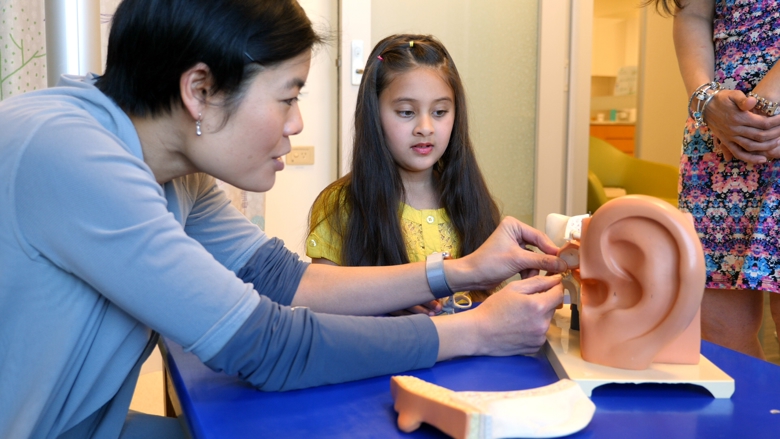
Our work to achieve these aims involves extensive collaborations across several major research projects including:
- The Australian National Child Hearing Health Outcomes Registry (ANCHOR), in collaboration with multiple child hearing health, education and support stakeholders around Australia, is aiming to develop a national data platform to track outcomes and minimise inequities in child hearing health service access.
- The Screen cCMV Project, in collaboration with Australia’s largest birth cohort GenV (Generation Victoria), is working to:
- ensure that testing is available for babies who should be tested for congenital cytomegalovirus (CMV), the most common infective cause of child hearing loss and,
- better understand how congenital CMV affects babies so more information is available to families about what to expect and what treatments may be available when their baby is diagnosed.
- The Australasian CMV Register (ACMVR) in collaboration with the Cerebral Palsy Alliance is a resource for future research about cCMV, specifically, its' aims are:
- To better understand the impact of cCMV over time
- To understand the use and outcomes of antiviral therapies given up to 1 year of age
- To investigate risk factors and identify potential avenues for prevention
- To contribute to and/or link with other datasets
- To provide a sampling frame for future research.
- The Victorian Childhood Hearing Longitudinal Databank (VicCHILD), in collaboration with the Victorian Infant Hearing Screening Program (VIHSP), has collected information on >1300 participant families. VicCHILD is more than a dataset, it represents an invaluable resource for understanding health and wellbeing for children who are deaf or hard of hearing.
- The Melbourne Genomics Implementation Project has sought to improve access and education around genomic investigation for childhood hearing loss. The aim is to have equitable access to the offer of genomic testing for every child to work toward precision therapies and interventions.
Policy and practice change
Our work has been instrumental in securing Medicare funding for deafness genomic testing resulting in increased access for 600 families every year in Australia.
Our research on targeted congenital CMV screening has been translated into routine clinical care at the Royal Children’s Hospital. Babies who are diagnosed with hearing loss within 21 days of birth now receive a saliva swab to test for CMV. This provides families an accurate answer of whether CMV caused their baby’s hearing loss, and enables affected babies the opportunity to access treatment, if appropriate, to reduce the impacts of the virus on the babies’ hearing and neurodevelopment.
Supporting the development of researchers and clinicians
Our research program is dedicated to building capacity among emerging and established researchers and clinicians. We have supported 150 researchers locally and internationally, answering over 47 research questions relating to the development and wellbeing of children who are deaf or hard of hearing. Our team has supervised >60 students, drawing from diverse academic backgrounds including research-based Honours, Masters, and PhD programs, as well as audiology, speech pathology, medicine, and paediatric fellowship training.
Raising awareness and spreading knowledge
With our supportive partners, we host the annual Australian congenital CMV symposium, aiming to raise awareness and drive innovative solutions to prevent the impacts of congenital CMV in children. Across all projects our team members regularly present at both local, national, and international conferences and events. Our message is simple, but we know the importance of repeating it: all deaf and hard of hearing children should be given the best opportunities to reach their full potentials.
Our research stands apart through its unwavering commitment to genuine community partnership. Rather than conducting research about children who are deaf or hard of hearing, we work with them and their communities as valued partners, ensuring their voices guide every aspect of our work from conception to completion.
Community Advisory Group Leadership
We have established and integrated the dedicated AusChildDeafness - Community Advisory Group within our research program, comprising families with lived experience of child deafness. This group doesn't simply advise, they actively shape research priorities, methodologies, and outcomes. Their lived experience ensures our studies address real-world challenges and deliver meaningful solutions that truly matter to deaf and hard of hearing children and their families.
Deaf Community Collaboration
We work closely with members of the Deaf community, including representatives from Deaf Victoria and Deaf Australia, to empower Deaf voices to lead sections of our research program. Community members are involved at every stage, from grant writing and project development through to implementation, dissemination of results, and publication of findings. This collaborative approach ensures our research reflects authentic community needs and contributes to positive change driven by those with lived experience.
Amplifying Children's Voices
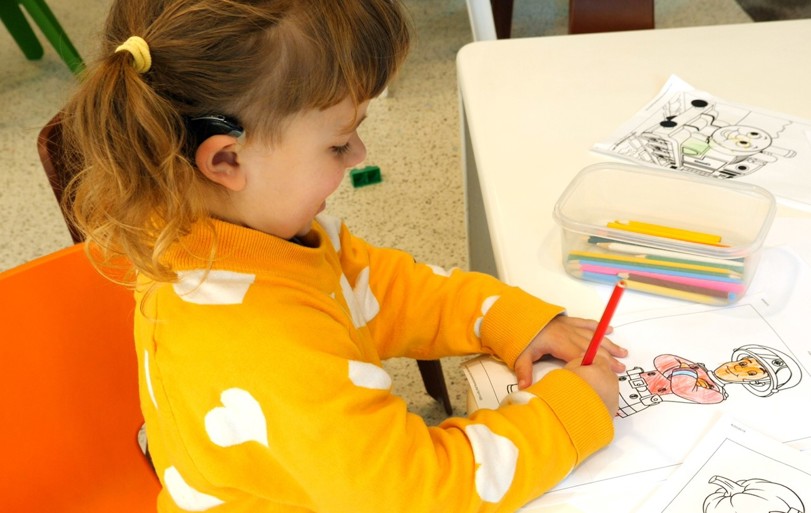
We are among the first research programs to utilise the Voice of the Child toolkit developed by MCRI, recognising that children who are deaf and hard of hearing are rarely asked directly “What matters to you?”. Through creative, accessible focus groups featuring drawing, play, and visual prompts, we captured a unique insight into children's perspectives on their hearing health needs. This child-centered approach ensures our research outcomes align with what children truly need to feel understood, supported, and empowered in their deafness and hearing health journey.
Our team
Associate Professor Valerie Sung – Co-Group Leader and Principal Research Fellow
Ms Libby Smith – Program Manager
Dr Alanna Gillespie – Project Manager
Dr Jing Wang – Postdoctoral Research Fellow
Kayla Elliott – Senior Research Assistant
Angela Pezic – Research Officer
Whitney Qian – Research Assistant
Evelyn Deutscher – Project Officer
Nessa Bond – Research Associate
Emma Webb – Honorary Fellow
Dr Peter Carew – Honorary Fellow
Erin Anderson – Research Assistant
Dr Zeffie Poulakis – Director of Psychology
Dr Melinda Barker – Director of Victorian Infant Hearing Screening Program (VIHSP)
Dr Jane Sheehan – Project Officer
Alison Jagger – Research Associate
Felicity Hood – Research Associate
Partners and funders
The Child Deafness and Hearing Research Program acknowledges the following funders and partners:
Associate Professor Valerie Sung receives funding from the NHMRC Investigator Grant Emerging Leadership 2 (GNT2033683) 2025-2029.
ANCHOR receives funding from the from NHMRC Hearing Health Evidence Based Support Services Grant (GNT2015735) 2022-2025: Building on newborn hearing screening success: towards national standards and data management.
The AusChildDeafness Community Advisory Group is supported by The Deafness Forum.
VicCHILD received funding from the Royal Children’s Hospital Foundation Grants, the Melbourne Children's LifeCourse platform, with funding from the Department of Health and Human Services, Victor Chiodo Foundation, and Morgan Stanley, and also received support from Deaf Children Australia.
The Melbourne Genomics Implementation Project is funded by Melbourne Genomics.
The Screen cCMV study is funded by an NHMRC CTCS Grant 2006491 and supported by the Deafness Foundation and Cerebral Palsy Alliance).
Resources
Research snapshot
Videos
- Hasas' story
- Pam Rogers and Valerie's CMV research
- Inner Ear Secrets podcast
- Dr Valerie Sung: 2019 L’Oréal-UNESCO For Women in Science Fellow
- Teddy's story
- Webinar: Can we eliminate the impact of congenital CMV?
Journal articles
Awards
- Australian National Child Hearing Health Outcomes Registry (ANCHOR), winner of the 2025 VBHCC People’s Choice Poster Prize at the Australian Value-Based Healthcare Conference 2025
Contact us
For general enquiries, please contact program manager Libby Smith, [email protected].