
Supporting language development and communication
December 2025
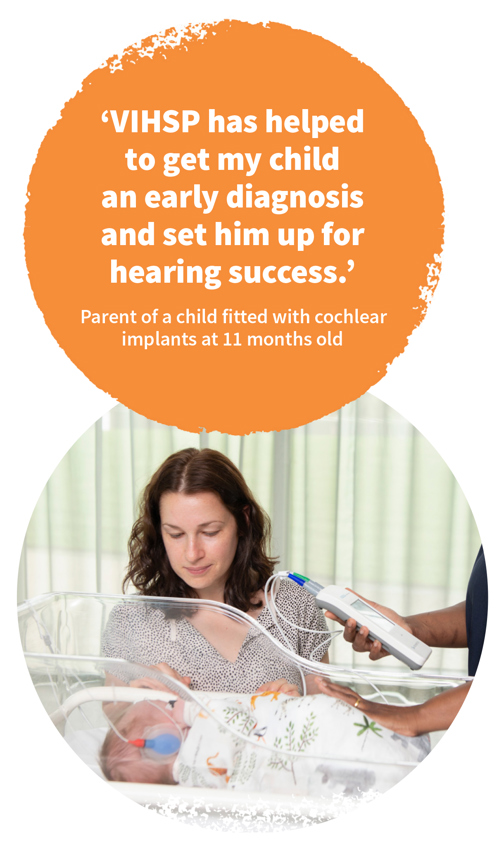
Detecting newborn hearing loss in the first weeks of life can enable early intervention that helps to optimise children’s language and communication.
The Victorian Infant Hearing Screening Program (VIHSP) was established in 2005 based on evidence and advocacy from the Centre. Now celebrating its 20th anniversary, VIHSP has screened the hearing of over 1.3 million babies across Victoria. Over 5,500 babies with reduced hearing have been identified, enabling their families to be provided with timely support, guidance and resources. Early and appropriate intervention for babies with reduced hearing helps children to reach their full potential in communication and development.
Our impact
Evidence-based universal screening
Over 98% of Victorian children have a hearing screen before one month of age. VIHSP staff provide screening every day of the year, reaching over 200 babies each day and 1,500 babies every week.
Early detection and intervention
Early identification means families can begin interventions like hearing aids, cochlear implants or communication therapy. This supports children to develop language skills in line with their peers, which is crucial for cognitive and social development.
Targeted family support
VIHSP Early Support Facilitators provide support, guidance and tailored resources to families within days of a baby being referred, ensuring timely, connected and responsive follow‑up care.
Next steps
The next phase of VIHSP involves ongoing quality improvement and optimising software and screening technology development. We will co-design support improvements with families, further tailoring to their needs.
The Victorian Infant Hearing Screening Program provides universal newborn hearing screening to all babies in Victoria. VIHSP aims to screen all babies to identify those with permanent reduced hearing to provide their families with the appropriate support and guidance. VIHSP is funded by the Victorian Department of Health.
This case study originally appeared in the Centre's 2025 Impact Report.