
The one with the giant flower: France as a case study on early child development systems in Europe
Prof Sharon Goldfeld AM
Before I left Australia, I proudly announced to everyone that I would be writing a blog series while I was on sabbatical in Paris. People very kindly said they would be keen to read my hypothetical blog series, which has left me with the somewhat daunting task of actually writing something that is entertaining without having all the great outfits of Emily in Paris (while Netflix has greatly overstated the fashion here, Parisians certainly do have style and flair).
When thinking about this 'reflections on equitable child development systems from afar' series, I thought about what my Australian and international early years colleagues might find interesting and relevant. I’ve landed on a blend of travel stories and people I meet, new aspects of French culture I didn’t know about before, and reflections on global approaches to equitable early childhood health and development.
I’ve now been in Paris for 2 weeks out of a 9-week sabbatical. As is often the case with travel, time seems to be going both slowly (one really can fit a lot into a day!) and quickly - I can’t believe it’s already 2 weeks.
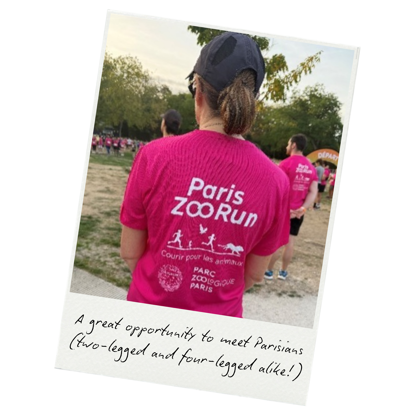
A couple of days after I touched down, I joined a 10km run around Paris Zoo. It was a great way to meet the locals and get a sense of the city, with the pink shirts serving as a great fashion-equaliser.
Compare the pair
France’s landmass is about 3 times the size of Victoria with a population of around 69 million people. 7.25 million (10-10.5% of the population) children are aged 0-9 years.
16,700km away, Australia has a population of around 2.9 million children 0-9 years (11% of the population).
In both countries, per year birth rate is falling.
The French early child development system, as it turns out, has very similar issues to Australia. One in 6 children has some sort of developmental issue by the time start school, with the vast majority being neurodiverse diagnoses. The French began looking at this about 6 years ago and established the PCO (Les plateformes de coordination et d’orientation) as a response.
These look a little like the Medicare Mental Health Kids Hubs within the Home - National Child & Family Hubs Network. They function as multidisciplinary places for families to bring their children referred by GP’s, paediatricians or nurses (although they provide limited direct support to parents for their support and are mainly about diagnosis and assessment for children with almost all therapy delivered as individualised care) with about 100 over France. The locations are denser in Paris with limited access in regional France, there is incredible variability in what is provided with few guidelines and the waitlists can be very long. It has never been evaluated until now-more to come on that. Issues sound familiar?
As I learned more, I found that the Australian and French early childhood systems share many similarities in the opportunities taken and the opportunities missed. For those of you following the Thriving Kids policy work, it is incredibly timely.
France's early childhood system has real structural strengths: near-universal, free preschool from age 3, a dedicated public health service aiming to track every child's development, and a genuinely well-designed pathway (the PCO) for getting struggling children real therapeutic support without the need for formal diagnosis.
But those strengths sit alongside real strain. PMI (Protection Maternelle et Infantile) is France's public health service covering pregnancy (midwives) through age 6 (nurses and paediatricians). It is underfunded and unevenly resourced and is now facing its second major reform attempt in seven years. There is a widening class gap in school outcomes, and the child poverty rate is at its highest in a generation.
Joy as a form of resistance
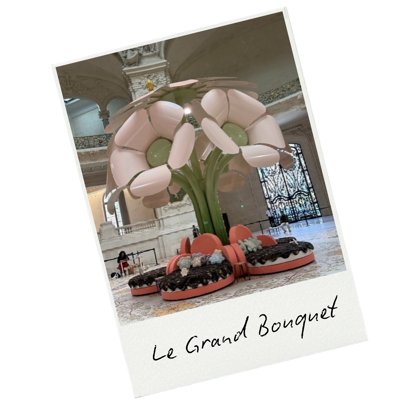
My arrival coincided with the tail end of Paris Design week. As many of you know I am a big believer of bringing the arts and science/research together and the need for creativity to do good research.
In Le Grand Palais built for the 1900 world fair, there stood a most beautiful and inspiring structure. This giant bouquet invites us to experience joy as a form of resistance. And indeed it was a great joy to sit in the beautiful building and just experience art.
I thought these words from the artist were particularly salient given the combination of the challenging world we live in and the passion and persistence needed to continue to try and make a difference:
‘In a context often marked by uncertainty, it affirms the power of beauty, imagination and optimism as a means of forging connection and sharing a common experience’ – Julien Sebban
Research and policy conversations
So far, my meetings and discussions here have been with both the OECD and with academics especially related to the INSERM (the national research institute) and ESSMA (Social Epidemiology, Mental Health and Addictions). More details to follow soon.
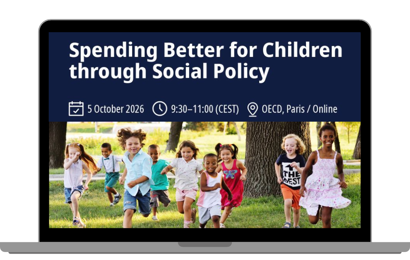
The report on Spending Better through Social Policy will be launched by the Centre on Wellbeing, Inclusion, Sustainability and Equal Opportunity (WISE). I’ve been asked to speak (which is amazing given the company I join in the lineup) as this aligns with the ideas of stacking and sequencing in our Restacking the Odds and Changing Children’s Chances work. It’s a hybrid event held at 6:30pm AEDT on Monday 5 October so you can register to join online here.
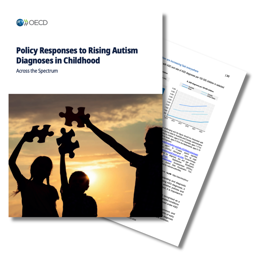
The OECD have also published a really interesting and highly relevant report on Policy Responses to Rising Autism Diagnoses in Childhood. It is easy to read and offers much food for thought as each Australian jurisdiction grapples with similar issues to our overseas neighbours. Take a close look at the Netherlands, Iceland and Ireland. I think we can say in Australia…we are not alone in thinking carefully about what next.
Reflections
Paris is a beautiful city that holds great allure (and great food!) where too many young people smoke…but that’s for another blog.
There is so much going on in just one country that we could learn from, let alone the many countries that are members of the OECD. While trying to distil this it strikes me that Australia has many opportunities to innovate. To date in all my conversations I have not found the ‘perfect’ country or system, but there are definitely ‘bits’ of systems that would be ripe for copying and/or adapting.
It’s comforting to know there is still much everyone is learning and a hope that Australia can maybe get ahead of the curve through Thriving Kids. The other reassuring aspect is that the ideas we are generating and the thinking we are doing about equitable child development outcomes seem important, relevant and well received here.
A bientôt
Sharon